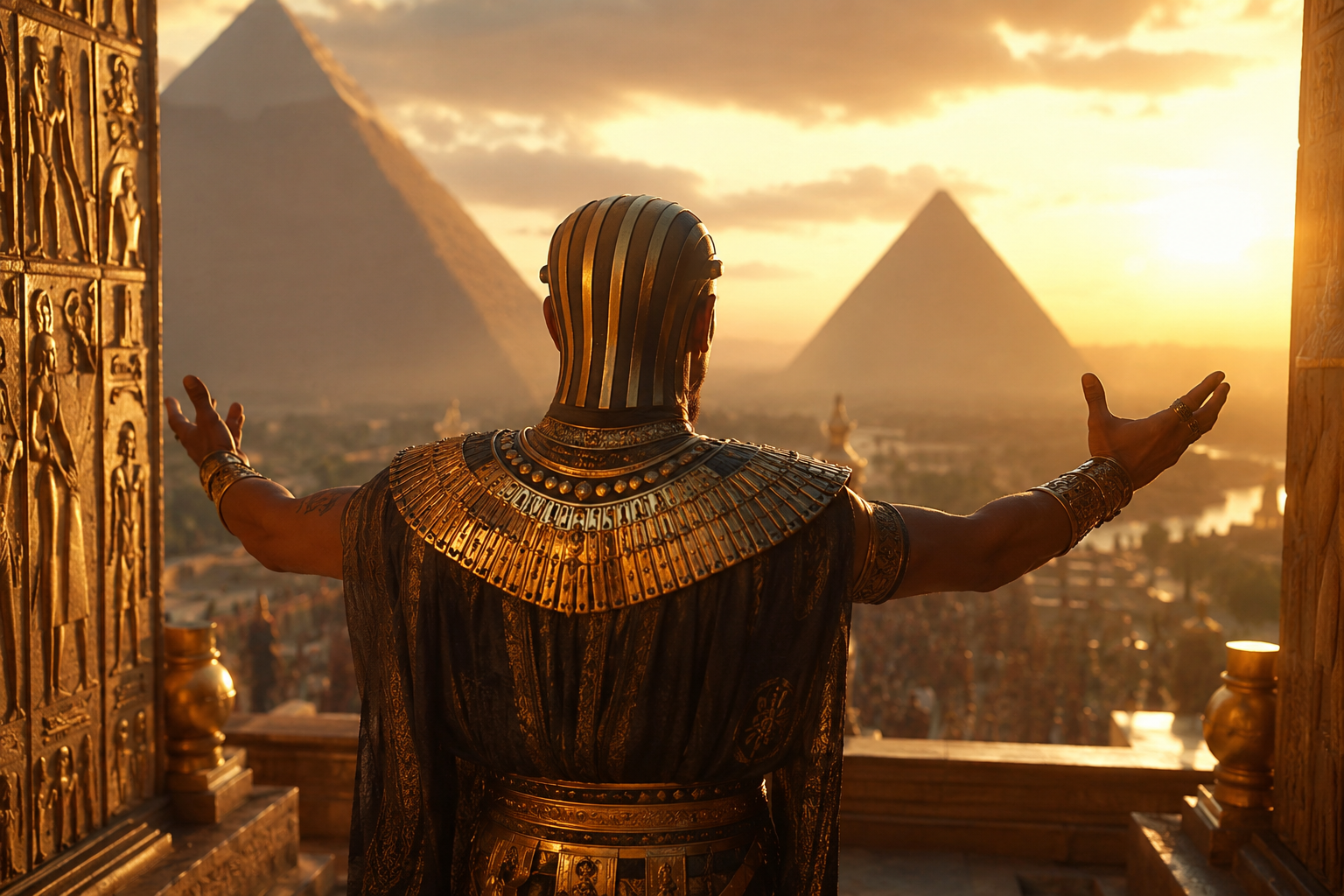
“I only show you what I see, and I only guide you to the path of right conduct.”
— Qur’an 40:29
Most people imagine villains as obvious.
They expect them to wear a dark cloak, twirl a mustache, and announce their evil intentions to the world.
History rarely works that way.
Pharaoh never stood before the people and declared, “I am the bad guy.”
Instead, he presented himself as the protector.
The leader.
The voice of reason.
The one who saw dangers others could not see.
According to the Qur’an, Pharaoh told his people:
“I only show you what I see.”
At first glance, the statement sounds harmless. It almost sounds responsible.
But hidden inside those words is a warning that echoes across centuries.
What happens when a leader becomes so convinced of his own judgment that he can no longer imagine being wrong?
What happens when disagreement is viewed as disloyalty?
What happens when questioning authority becomes more dangerous than questioning truth?
These are not merely ancient questions.
They are human questions.
The story of Pharaoh survives because it is bigger than Egypt.
It is a pattern.
Every generation produces people who claim exclusive insight.
Every generation produces institutions that insist they know what is best for everyone else.
Every generation faces the temptation to surrender independent thought in exchange for certainty.
The danger is not power itself.
The danger begins when power stops listening.
The believer mentioned in Surah Ghafir offers a remarkable contrast. He does not respond with blind rebellion. He does not respond with blind obedience.
Instead, he asks a simple question:
What if we are wrong?
It is one of the most powerful questions ever spoken.
Civilizations rise because people ask it.
Civilizations fall when they stop.
The lesson is not about ancient Egypt.
The lesson is not about one king.
The lesson is not about one political party.
The lesson is about the human tendency to trust confidence more than wisdom and authority more than truth.
Pharaoh’s greatest mistake was not that he had power.
His greatest mistake was believing that his own perspective was the measure of reality itself.
That temptation did not die on the banks of the Nile.
It walks among us still.
And perhaps the most important question any generation can ask is this:
When power speaks, do we listen with our minds awake—or do we simply listen because power is speaking?
Leave a Reply