When the water finally left New Orleans, the silence felt unnatural.
People expected noise after a disaster:
sirens,
helicopters,
generators,
reporters talking too loudly into cameras.
But in the Lower Ninth Ward during the weeks after Hurricane Katrina, entire streets sometimes sat so quiet you could hear water dripping from broken roofs blocks away.
That was what seventeen-year-old Isaiah remembered most.
Not the storm itself.
The silence afterward.
Before Katrina, his grandmother’s neighborhood had been alive in a way outsiders never fully understood. People sat on porches late into humid evenings. Church music drifted through open windows on Sundays. Neighbors argued, laughed, grilled food, and yelled greetings across narrow streets.
Then the levees failed.
Water rushed into neighborhoods with terrifying speed. Homes filled from the inside out. Cars floated sideways through intersections. Entire families climbed into attics trying to escape rising floodwater.
Official investigations later confirmed catastrophic failures in the federal levee system contributed heavily to the flooding disaster. Thousands of residents were displaced, and more than 1,800 people died across the Gulf Coast region.
Isaiah’s family survived by escaping onto their roof before rescue crews arrived.
But survival and recovery are different things.
When they returned weeks later, their neighborhood looked less destroyed than abandoned by reality itself.
Mud coated the streets.
Window blinds fluttered inside empty homes.
A refrigerator lay upside down in somebody’s yard several houses away.
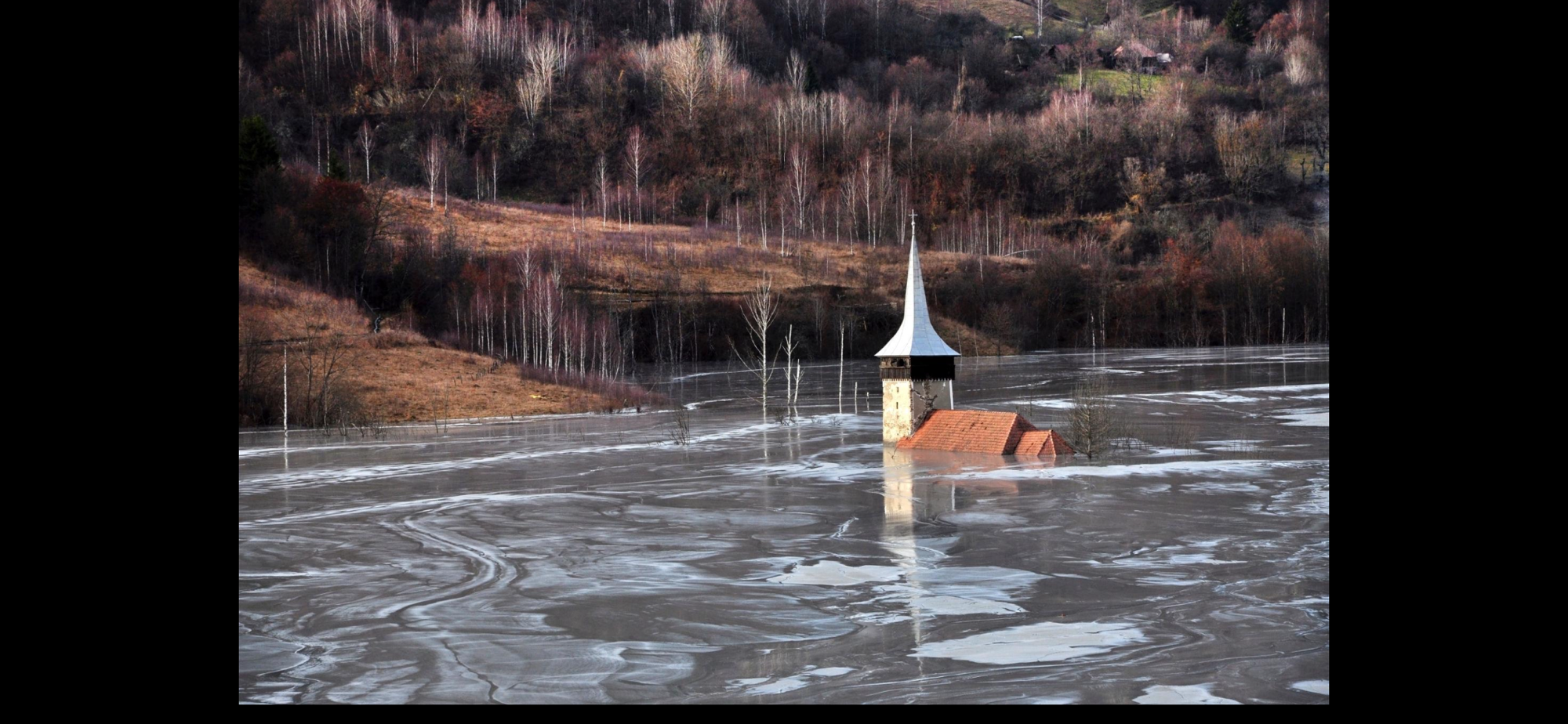
And at the end of the block, the old church still stood.
Barely.
St. Mercy Baptist Church had anchored the neighborhood for decades.
Its white paint peeled even before the hurricane, but the building carried history inside its walls. Weddings. Funerals. Baptisms. Community dinners. Hurricane prayers whispered long before Katrina ever formed over the ocean.
Floodwater reached halfway up the church doors during the storm.
Inside, hymn books floated through black water beside broken pews.
Most people assumed the church would eventually be demolished like so many other damaged buildings nearby.
But something strange started happening first.
At night, neighbors claimed they heard the church bell ringing.
Only once.
Always around the same time.
2:17 AM.
Isaiah first heard it while sleeping inside a FEMA trailer parked beside his grandmother’s ruined house.
The sound woke him instantly.
A single deep bell echoing through the flooded darkness.
He sat upright beneath the trailer’s weak ceiling fan listening carefully.
Nothing followed.
No second ring.
No voices.
Just silence settling back over the neighborhood.
The next morning, his grandmother noticed his expression immediately.
“You heard it too,” she said quietly.
Isaiah laughed nervously. “Probably wind.”
But she did not answer.
Over the following weeks, more people mentioned the bell.
A volunteer from Texas heard it while helping clear debris.
A National Guard worker reportedly heard it while driving through the neighborhood after midnight.
Even people who dismissed ghost stories admitted something about the sound felt unsettling because the church bell system no longer worked.
The electrical system had been destroyed by floodwater.
Officially, there should have been no bell at all.
Naturally, rumors spread.
Some residents believed trapped floodwater shifted loose metal inside the damaged tower during certain wind conditions.
Others whispered darker explanations.
One local story claimed several residents had sheltered inside the church before floodwaters rose too quickly for escape.
No verified records confirmed this happened.
But Katrina produced so much chaos, displacement, and confusion that many stories from those weeks still remain fragmented or uncertain.
That uncertainty became fertile ground for fear.
One humid October night, Isaiah finally walked to the church alone after hearing the bell again.
The streets remained mostly dark because power had not fully returned to many parts of the neighborhood. Emergency floodlights cast weak yellow pools across broken pavement while abandoned homes stood open to the night air.
As Isaiah approached the church, the smell hit him first.
Not death.
Not rot.
Wet wood.
Mold.
River water soaked permanently into old walls.
The front doors stood slightly open.
Inside, moonlight spilled across overturned pews and water-stained floors.
Everything looked frozen halfway between ruin and memory.
Isaiah stepped carefully through the sanctuary.
Family photographs still sat near the altar where flood cleanup crews had gathered recovered belongings months earlier. A child’s shoe rested beneath one pew.
Then he heard movement above him.
A soft metallic creak from the bell tower.
Isaiah froze.
The church settled constantly now. Damaged beams shifted at night when temperatures changed. Rational explanations existed for every sound.
Still, fear moved through him slowly and deeply.
Because damaged places sometimes feel alive after disasters.
Not haunted.
Wounded.
Then the bell rang.
One enormous note exploded through the sanctuary.
Isaiah nearly fell backward.
Dust drifted from ceiling beams while the sound echoed through the hollow church and out across the ruined neighborhood.
He stared upward into darkness.
For one second—only one—he thought he saw movement near the tower staircase.
A figure standing partially hidden behind broken wood.
Then lightning flashed outside.
The staircase was empty.
When Isaiah later told others what happened, reactions varied.
Some believed him immediately.
Others insisted trauma after Katrina had affected people’s perceptions. Mental health experts have documented how survivors of major disasters often experience heightened anxiety, sensory confusion, insomnia, and emotional distress long after the event itself ends.
That explanation made sense.
But even years later, residents occasionally reported hearing the bell ring once during heavy storms.
Never repeatedly.
Always once.
As though something inside the church still tried to announce itself before falling silent again.
Eventually much of the neighborhood rebuilt.
Families returned slowly.
Others never came back at all.
New homes rose beside empty lots where flood-damaged houses had been demolished. Grass covered foundations. Entire blocks carried gaps like missing teeth.
But the church remained standing.
Scarred.
Quiet.
Watching.
And maybe that is what makes disaster Gothic different from ordinary horror stories.
The fear does not come from monsters hiding in darkness.
It comes from realizing real places absorb human suffering.
A storm passes.
The water drains.
The cameras leave.
But grief lingers in walls, streets, photographs, and empty neighborhoods long after the headlines disappear.
That is why people still talk about Katrina with a certain heaviness in their voices.
Not because the city died.
But because parts of it survived while carrying memories too heavy to fully bury.
And late at night, when thunder rolls across New Orleans and rainwater glitters beneath streetlights, some residents still pause after hearing distant church bells.
Listening carefully.
Just in case the sound comes again.
Leave a Reply