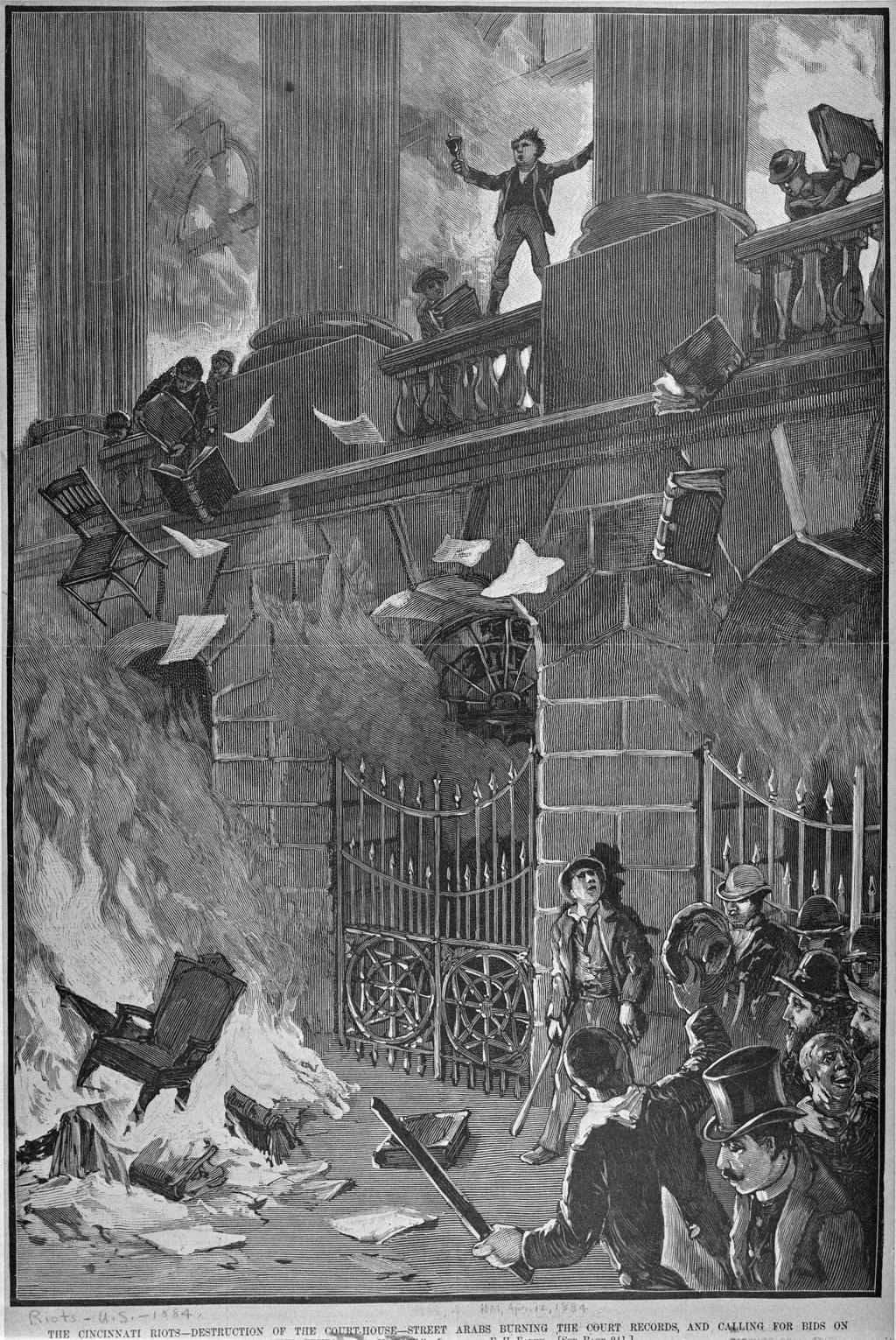
Cincinnati, Ohio — March 1884. Some records survive the fire. Others refuse to stay buried.
The Last Entry
On the evening of March 28, 1884, Clara Voss counted the pages in a narrow courthouse ledger for the third time. There were sixty-three. There should have been sixty-four.
Clara was a fictional clerk, but the anger rising beyond her window was real. Cincinnati had been shaken by the murder of William H. Kirk and the controversial manslaughter verdict against William Berner. That evening, a large public meeting gathered at Music Hall. When the crowd dispersed, thousands headed toward the jail.
Clara knew none of that when she found the torn binding. All she knew was that a page had been cut out cleanly, leaving behind a pale rectangle and the scent of lamp oil.
At the bottom of the preceding page, written in a hand she did not recognize, were four words: Ask who moved him.
The March from Music Hall
By the time Clara reached the courthouse steps, the street was thick with voices. Someone said the man the crowd wanted had already been taken to Columbus. Someone else said that did not matter. Anger had gathered a life of its own.
Clara turned back inside. Her supervisor, Mr. Bell, stood beside the records cabinet with his hat in his hands.
“Go home,” he told her.
“A page is missing.”
“Then let it stay missing.”
He spoke so quietly she almost missed the warning. Almost.
Outside, a window shattered. The first sharp report of gunfire cut through the night.
The Fire That Remembered
The real Cincinnati courthouse riots continued through the weekend. Violence engulfed the courthouse and jail area. The courthouse and its law library burned, and many people were killed or wounded. Contemporary and later accounts differ on the exact death toll.
In Clara’s story, she returned after the worst of the violence, when ash lay across the street like gray snow. Where the records cabinet had stood, she found blackened hinges and a single brass corner plate.
Mr. Bell was gone. So was the ledger.
But on the courthouse steps sat a little parcel tied with blue thread. Inside was the missing sixty-fourth page. Its writing had survived untouched.
Not names. Not payments. Only dates, each followed by the same two words: Transferred early.
The final entry bore the date March 28.
Below it, in a different hand, someone had written: The city will blame the flames. Keep the original.
What the Ashes Left Behind
Years later, when a new courthouse stood where the old one had burned, Clara returned with the page folded inside her glove. She meant to surrender it. Instead she stood beneath the high windows and watched a court officer unlock a door.
He wore Mr. Bell’s brass corner plate on a chain around his neck.
“Where did you get that?” she asked.
He looked at the plate, then at her.
“Ma’am,” he said, “I’ve been waiting for you to ask.”
Somewhere inside the building, a door slammed. Clara heard the sound of pages turning though no one stood near the records shelves.
And for the first time in years, she understood that the fire had not destroyed the secret. It had merely changed its keeper.
The History Beneath the Fiction
The Cincinnati courthouse riots of March 28–30, 1884, and the burning of the courthouse are historical events. Clara Voss, Mr. Bell, the ledger, and the mysterious encounters are fictional inventions. The story does not claim that a real missing ledger existed.
Historical background: Ohio History Connection — The Great Cincinnati Courthouse Riots of 1884; Hamilton County Law Library — You Can Still Smell the Burning.
Support the Author: If this story stayed with you, please share it and help keep forgotten history in the light.
Leave a Reply