Ghostwriter: Elara Vale
SLEEPY HOLLOW, NEW YORK — 1790s
Sleepy Hollow has always sounded like a place pretending to be harmless. A lullaby of a name. A suggestion that nothing sharp or urgent could survive there. That was the first lie the land ever told.
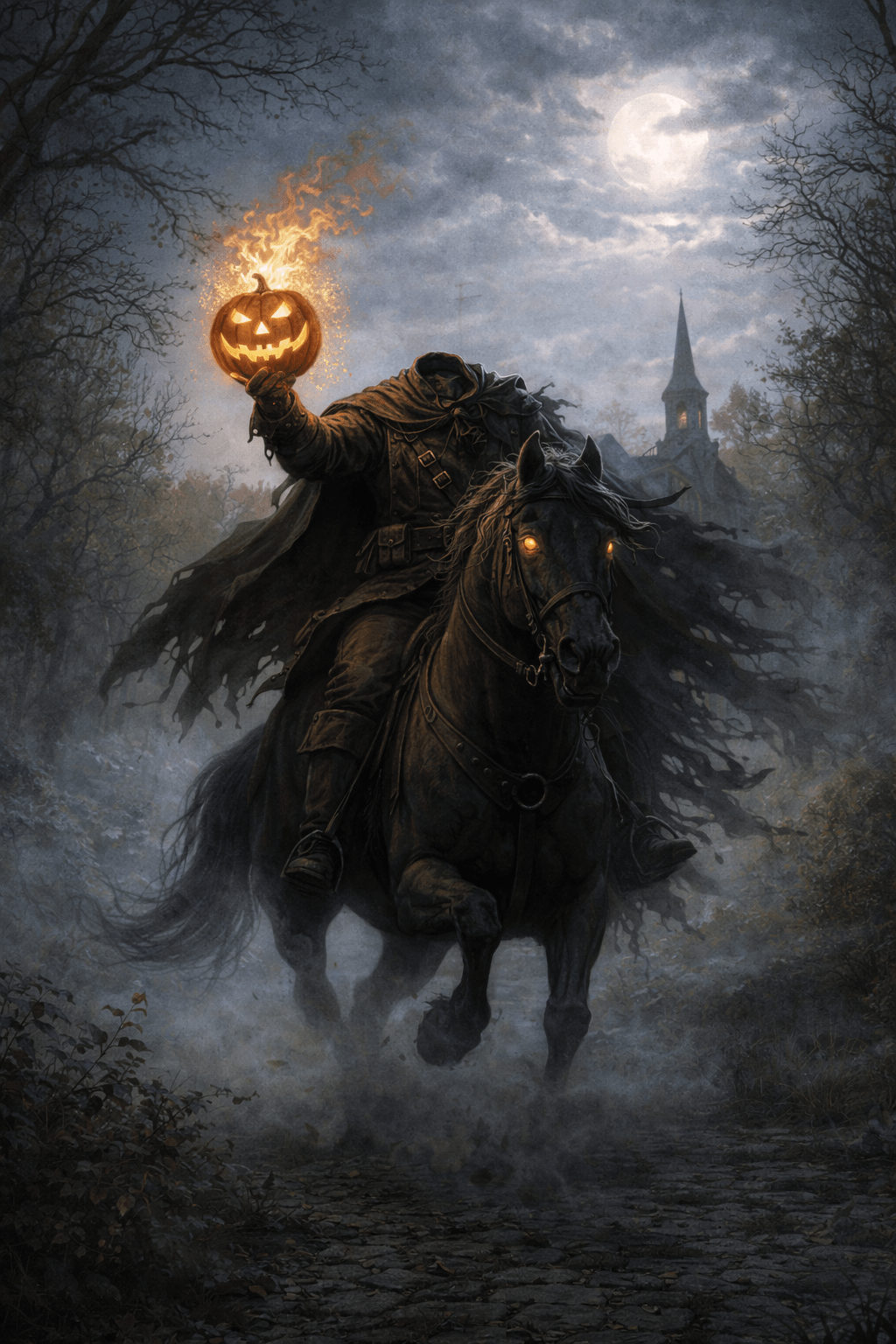
The road where the Headless Horseman rides was already old when the cannon spoke. Trees leaned inward like conspirators. The ground held fog the way a mouth holds a secret. When the Hessian soldier lost his head to a cannonball during the Revolutionary War, the violence didn’t end—it simply changed its shape. The body fell. The war moved on. The land kept the rest.
People say the Horseman rides because he is angry. That’s a comfort story. Anger burns out. What rides through Sleepy Hollow is unfinished. A man severed from conclusion. A death without ceremony, without meaning, without rest. The revolution demanded sacrifice, and the land collected payment with interest.
Washington Irving turned the Horseman into a story you could read by candlelight, something safely contained between covers. But the Hollow never agreed to that version. It does not care about narrative arcs or morals. It remembers the sound the cannon made when it tore identity from flesh. It remembers how quickly history moved on.
At night, the forest reorganizes itself. Paths lengthen. Familiar turns misalign. Hoofbeats appear where no horse should fit. The Horseman does not chase everyone—only those who mistake the past for something settled. He rides low and fast, uniform rotting but precise, sword raised not to kill but to remind. The head he carries changes. Sometimes it is a pumpkin. Sometimes it is memory. Sometimes it is the face of whoever looks back too long.
Sleepy Hollow learned early how to survive by storytelling. Turn fear into folklore. Turn violence into tradition. Turn unresolved history into seasonal décor. But the Horseman cuts through those defenses like mist through branches. He is not a ghost in the usual sense. He is a function. A recurring error in the system. Proof that revolutions do not end—they echo.
The bridge is still there. The trees still listen. And every generation relearns the same lesson: you can outrun a man, but you cannot outrun what the ground remembers.
The Horseman rides because the land never stopped asking who paid the price—and who didn’t.
 Wicked Grim Stories
Leave a comment