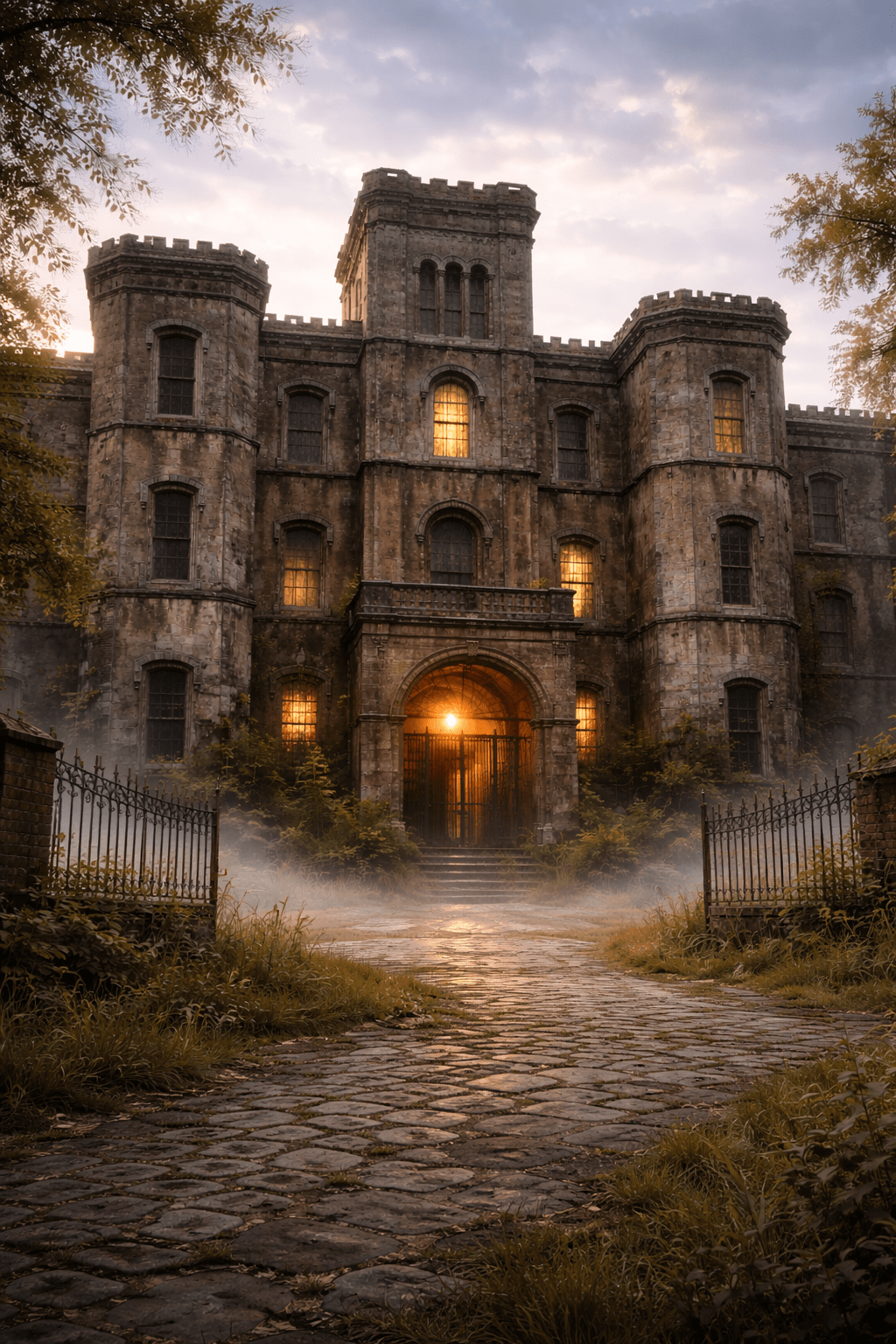
Ghostwriter: Elara Vale
CHARLESTON, SOUTH CAROLINA — 1802
Charleston was already old when the jail was born. Old money. Old bones. Old sins that had learned to dress themselves in lace and manners. The Old City Jail rose in 1802 like a warning no one pretended not to understand: order would be enforced, bodies would comply, and silence would follow.
It was never meant to be beautiful. But it was meant to last.
Brick by brick, the jail absorbed the heat, the humidity, the salt air creeping in from the harbor like a witness who never forgot. Men and women were packed inside it—pirates, rebels, murderers, thieves, and those whose only crime was existing in the wrong body at the wrong moment in history. The city learned early how to make violence bureaucratic. Executions were scheduled. Screams were incidental.
Death happened upstairs.
They say the walls remember. That’s an oversimplification. Walls don’t remember. They retain. They store pressure. Fear. Breath that never finished leaving the lungs. The Old City Jail became less a building than a container—an archive of unfinished endings.
By the time the last prisoners left, the jail had learned how to make noise without mouths.
Visitors hear screams because screams are the most efficient language fear ever invented. Shadowy figures appear because the human brain insists on faces, even when the truth is more abstract. Cold drafts slip through rooms like fingers because the building never learned how to let go. It doesn’t know the war is over. It doesn’t know the laws changed. It only knows that suffering once had an address—and this was it.
Charleston pretends the jail is a curiosity now. A stop on a ghost tour. A place to laugh nervously and say, Did you feel that? But the jail is not haunted the way people like to imagine. There are no chains rattling for drama. No polite apparitions waiting to be photographed.
There is only compression.
Every execution folded the space a little tighter. Every scream bent the air. Over time, the building began to exhale at night, releasing what it could no longer contain. That’s the cold people feel. That’s the sense of being watched. Not by individuals—but by consequence.
Stand in the right corridor long enough and your thoughts start to echo strangely, like you’ve walked into a room that doesn’t belong to the present. Some visitors leave feeling dizzy, hollowed out, suddenly furious for no clear reason. The jail doesn’t scare you. It hands something back.
Charleston was built on elegance layered over cruelty, and the jail was where the cruelty didn’t bother pretending. That’s why it still screams. Not because it wants attention—but because it was never given absolution.
Buildings like this don’t ask forgiveness. They wait for honesty.
And Charleston, beautiful Charleston, has always struggled with that.
 Wicked Grim Stories
Leave a comment